Complete AWS AWS Solutions Architect Professional

CI/CD for Containerized Applications

PRJ-AWS-SAP-018

GitOps-based deployment pipeline for Kubernetes

~8 min read Intermediate
Status Complete
Last Updated May 26, 2026
Completion 100%
Status: Complete· Last Updated: May 26, 2026· Completion: 100%· ~8 min read· Intermediate

Estimated Monthly Cost

~$35/mo on minimal config
ComputeStorageMonitoring
Business ContextMaintaining consistent security configurations and policies across a growing num…

The Problem

  • Maintaining consistent security configurations and policies across a growing number of AWS accounts is complex and error-prone.
  • Lack of centralized visibility into security findings, compliance status, and potential threats across the entire enterprise AWS footprint.
  • Manual identification and remediation of security vulnerabilities and non-compliant resources are time-consuming and inefficient.

The Solution

  • Implements AWS Security Hub to aggregate security findings from multiple AWS services and accounts into a single pane of glass.
  • Deploys Amazon GuardDuty for continuous threat detection and monitoring of malicious activity and unauthorized behavior within AWS accounts.
  • Configures Amazon Macie to automatically discover, classify, and protect sensitive data stored in Amazon S3 across the multi-account environment.

Business Value

  • Achieves a 40% reduction in manual effort for security configuration audits across all AWS accounts.
  • Improves security incident detection and response time by 25% through centralized alerts and automated workflows.
  • Increases overall compliance posture by 15% against industry benchmarks within the first six months of implementation.
  • Reduces potential financial and reputational impact of data breaches by proactively identifying and protecting sensitive information.

Risk Mitigation

  • Mitigates the risk of security misconfigurations and policy drift across diverse AWS accounts.
  • Addresses the risk of undetected threats, malware, and unauthorized access attempts within the cloud environment.
  • Reduces the risk of sensitive data exposure and regulatory non-compliance due to inadequate data protection.
  • Lowers the risk of human error in security operations through automation and centralized management.
GRC MappingNIST Cybersecurity Framework (CSF) v1.1: Focus on Identify (Asset Management, Go…

Compliance Frameworks

  • NIST Cybersecurity Framework (CSF) v1.1: Focus on Identify (Asset Management, Governance), Protect (Access Control, Data Security), and Detect (Continuous Monitoring) functions.
  • ISO 27001:2022: Specifically controls under A.5 (Organizational controls) for information security policies and A.8 (Information security incident management).
  • SOC 2 Type 2: Addresses the Trust Services Criteria of Security, Availability, and Confidentiality through continuous monitoring and threat detection.

Security Controls Implemented

  • Centralized security posture management and compliance checks using AWS Security Hub.
  • Automated threat detection and anomaly identification across accounts via Amazon GuardDuty.
  • Sensitive data discovery, classification, and protection implemented with Amazon Macie.
  • Continuous monitoring of security configurations and adherence to best practices using AWS Security Hub's integrated standards.
  • Forensic analysis and investigation capabilities provided by Amazon Detective for security incidents.

Audit Evidence

  • AWS Security Hub compliance reports and security scores for various standards (e.g., CIS AWS Foundations Benchmark).
  • Amazon GuardDuty findings and threat intelligence reports detailing detected malicious activities.
  • Amazon Macie sensitive data discovery jobs and S3 bucket policy evaluations.
  • AWS CloudTrail logs demonstrating configuration changes and API calls related to security services.

Regulatory Alignment

  • GDPR (General Data Protection Regulation): Article 32 (Security of processing) through data protection and threat detection.
  • HIPAA (Health Insurance Portability and Accountability Act): Security Rule (45 CFR Part 164, Subpart C) by protecting ePHI with Macie and GuardDuty.
  • PCI DSS (Payment Card Industry Data Security Standard) v3.2.1: Requirement 10 (Track and monitor all access to network resources and cardholder data) via GuardDuty and Security Hub.

Video tutorial coming soon!

Subscribe to our YouTube channel to get notified when this tutorial is published.

Subscribe on YouTube

Architecture Diagram
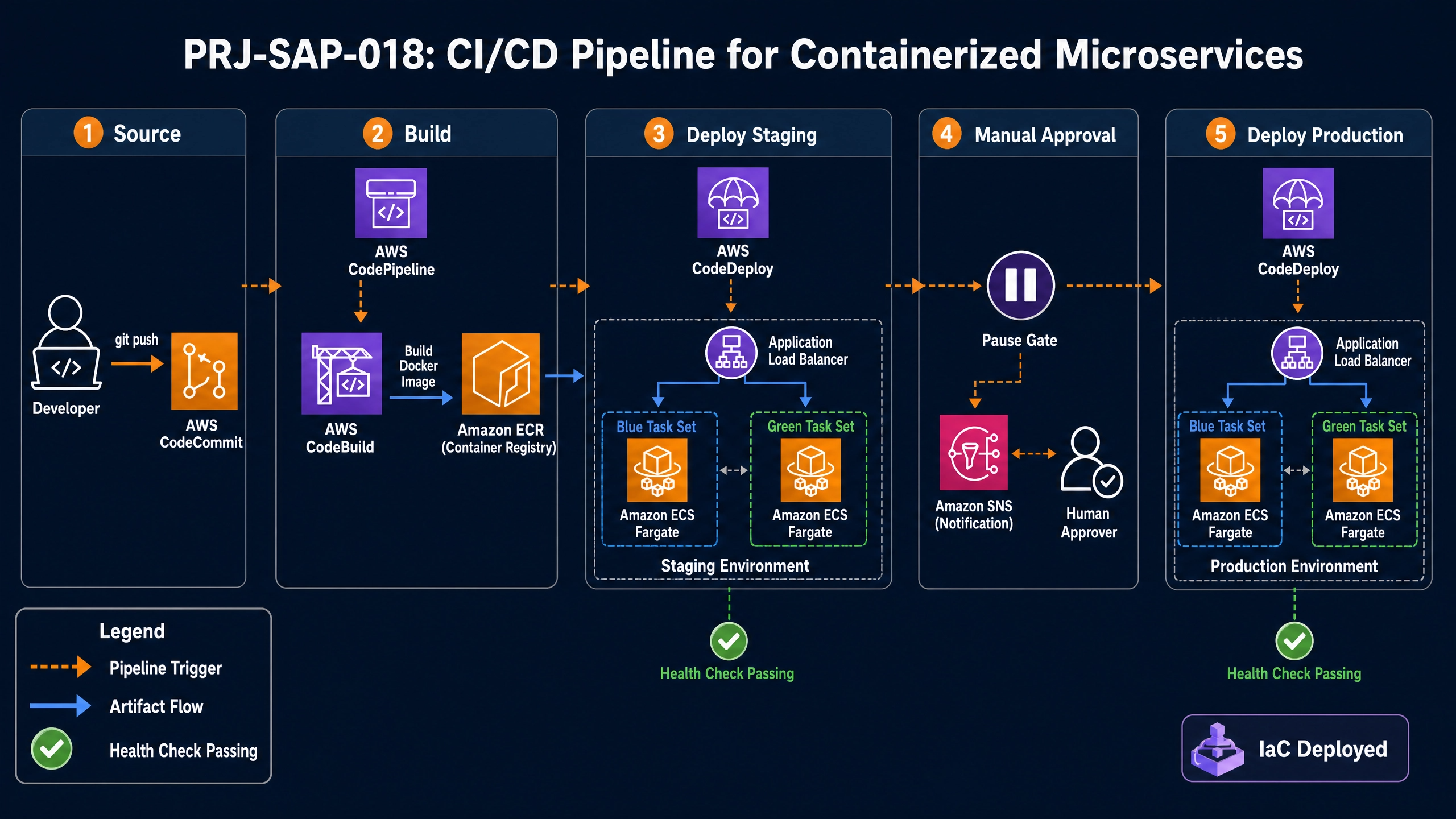
PRJ-AWS-SAP-018 Architecture

Technology Stack

EKS
CodePipeline
ECR
ArgoCD
GitOps

Complete Documentation

Prerequisites

IAM Admin or PowerUser role
AWS CLI v2 configured
Terraform >= 1.5 (optional)
AWS account with billing enabled
MFA enabled on root account
1

Clone & Configure

Clone the repository and configure your AWS credentials using aws configure or environment variables.

aws configure --profile cloudguard
2

Review IAM Policies

Review and attach the required IAM policies to your deployment role. Ensure least-privilege access is applied.

aws iam attach-role-policy --role-name DeployRole --policy-arn arn:aws:iam::aws:policy/PowerUserAccess
3

Initialize Infrastructure

Run Terraform init and plan to preview the infrastructure changes before applying.

terraform init && terraform plan -out=tfplan
4

Deploy Resources

Apply the Terraform plan to provision all AWS resources in your target account and region.

terraform apply tfplan
5

Verify & Monitor

Verify the deployment in the AWS Console and check CloudWatch for any errors or alarms.

aws cloudwatch describe-alarms --state-value ALARM

Deployment Guide

Step-by-step instructions to deploy this project

Download Guide

Architecture Diagram

Visual representation of the system architecture

Download Architecture

Source Code

Complete source code and configuration files

View on GitHub

Video Tutorial

Watch the complete walkthrough video

Watch Now