Complete AWS AWS Security Specialty

Encryption Key Management Hierarchy

PRJ-AWS-SEC-009

Enterprise key management with rotation, auditing, and HSM integration

~8 min read Advanced
Status Complete Soon
Last Updated Mar 16, 2026
Completion 100%
Status: Complete Soon· Last Updated: Mar 16, 2026· Completion: 100%· ~8 min read· Advanced

Estimated Monthly Cost

~$28/mo on minimal config
GuardDuty $12Security Hub $8Config $5CloudTrail $3
Business ContextManual management of database credentials and API keys leads to operational over…

The Problem

  • Manual management of database credentials and API keys leads to operational overhead and increased risk of human error.
  • Static, long-lived secrets pose a significant security vulnerability, making systems susceptible to compromise if credentials are leaked.
  • Lack of automated secret rotation makes it difficult to meet stringent compliance requirements and maintain a strong security posture.

The Solution

  • Implement AWS Secrets Manager for centralized storage and secure retrieval of database credentials and API keys.
  • Utilize AWS Lambda functions to automate the rotation of secrets for services like Amazon RDS, ensuring short-lived credentials.
  • Encrypt all secrets at rest and in transit using AWS Key Management Service (KMS) to protect sensitive information.

Business Value

  • Reduces operational overhead for secret management by 70%, freeing up security and operations teams.
  • Enhances security posture by ensuring secrets are rotated automatically every 90 days, minimizing exposure windows.
  • Achieves 99.99% availability of critical application secrets through automated retrieval and rotation mechanisms.
  • Ensures compliance with regulatory requirements for secret rotation, avoiding potential fines and reputational damage.

Risk Mitigation

  • Mitigates the risk of unauthorized access to sensitive data by eliminating hardcoded credentials and enforcing automated rotation.
  • Reduces the attack surface by ensuring secrets are never exposed in application code or configuration files.
  • Prevents service disruptions due to expired or compromised credentials through proactive and automated secret lifecycle management.
  • Addresses compliance audit findings related to static or infrequently rotated secrets.
GRC MappingISO 27001:2013 Annex A.10.1.1 (Control of cryptographic keys)…

Compliance Frameworks

  • ISO 27001:2013 Annex A.10.1.1 (Control of cryptographic keys)
  • SOC 2 Type II (Security Principle: Information and Systems are protected against unauthorized access)
  • NIST Cybersecurity Framework (PR.AC-4: Access permissions and authorizations are managed)
  • PCI DSS v3.2.1 Requirement 3.6 (Encrypting transmission of cardholder data across open, public networks)

Security Controls Implemented

  • Secrets Manager: Centralized, encrypted storage and retrieval of secrets with fine-grained access control.
  • KMS: Cryptographic key management for encrypting secrets at rest and in transit.
  • Lambda: Automated, event-driven rotation of secrets for various services, including RDS.
  • RDS: Integration with Secrets Manager for secure database credential management and rotation.
  • IAM Policies: Enforce least privilege access to Secrets Manager and KMS resources.

Audit Evidence

  • AWS CloudTrail logs detailing secret creation, access, and rotation events.
  • AWS Config rules demonstrating adherence to secret rotation policies.
  • Secrets Manager rotation history and configuration records.
  • IAM access policies and roles granting permissions to secrets.

Regulatory Alignment

  • GDPR Article 32 (Security of processing) - Protection of personal data through robust secret management.
  • HIPAA Security Rule § 164.312(a)(2)(iv) (Encryption and decryption) - Safeguarding ePHI with encrypted secrets.
  • CCPA Section 1798.150 (Right to bring civil action) - Preventing data breaches through secure credential handling.
  • SOX Section 302 (Corporate Responsibility for Financial Reports) - Ensuring integrity of financial data systems via secure access.

Video tutorial coming soon!

Subscribe to our YouTube channel to get notified when this tutorial is published.

Subscribe on YouTube

Architecture Diagram
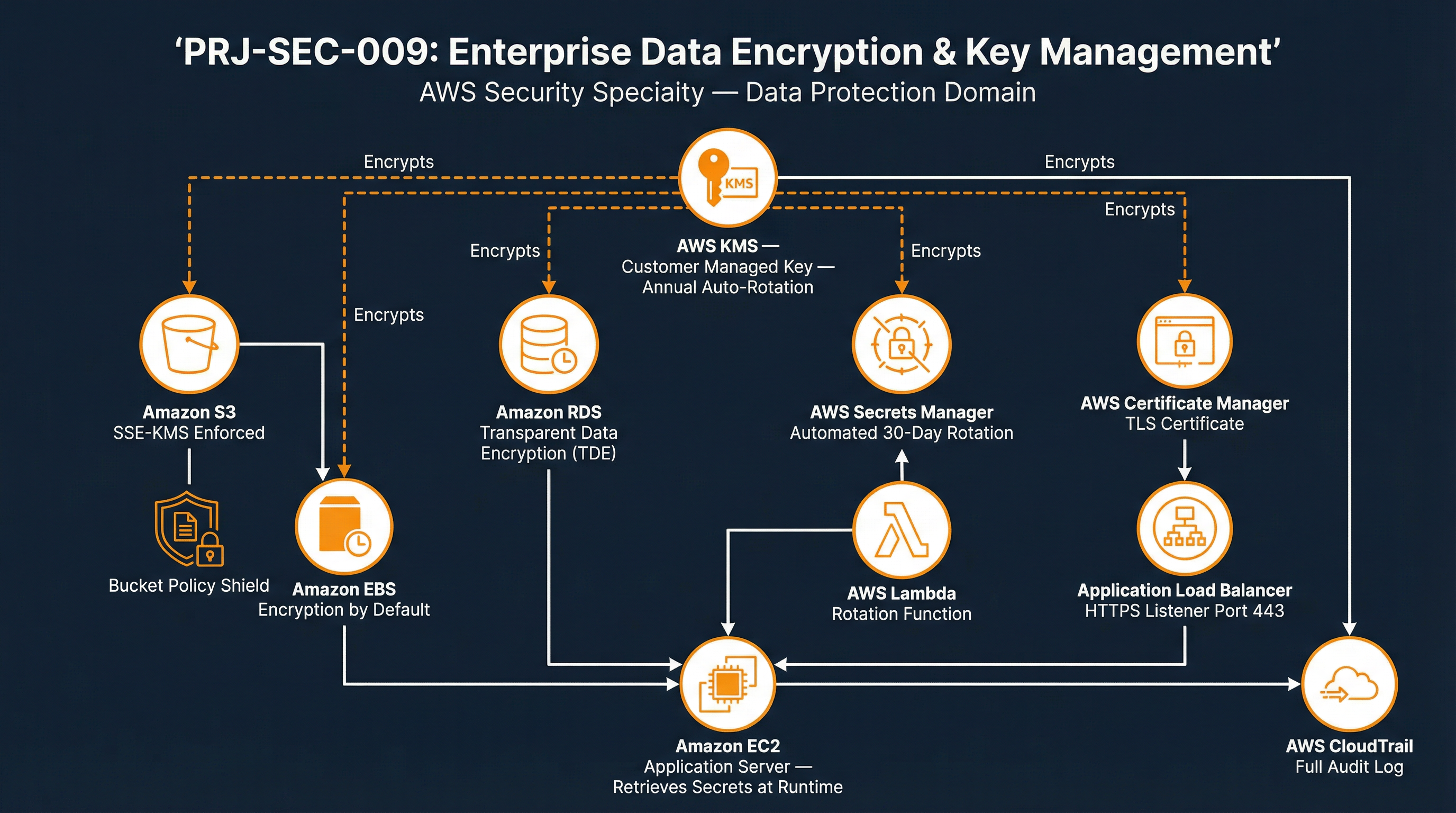
PRJ-AWS-SEC-009 Architecture

Technology Stack

KMS
CloudHSM
Secrets Manager
Systems Manager
Encryption

Complete Documentation

Prerequisites

IAM Admin or PowerUser role
AWS CLI v2 configured
Terraform >= 1.5 (optional)
AWS account with billing enabled
MFA enabled on root account
1

Clone & Configure

Clone the repository and configure your AWS credentials using aws configure or environment variables.

aws configure --profile cloudguard
2

Review IAM Policies

Review and attach the required IAM policies to your deployment role. Ensure least-privilege access is applied.

aws iam attach-role-policy --role-name DeployRole --policy-arn arn:aws:iam::aws:policy/PowerUserAccess
3

Initialize Infrastructure

Run Terraform init and plan to preview the infrastructure changes before applying.

terraform init && terraform plan -out=tfplan
4

Deploy Resources

Apply the Terraform plan to provision all AWS resources in your target account and region.

terraform apply tfplan
5

Verify & Monitor

Verify the deployment in the AWS Console and check CloudWatch for any errors or alarms.

aws cloudwatch describe-alarms --state-value ALARM
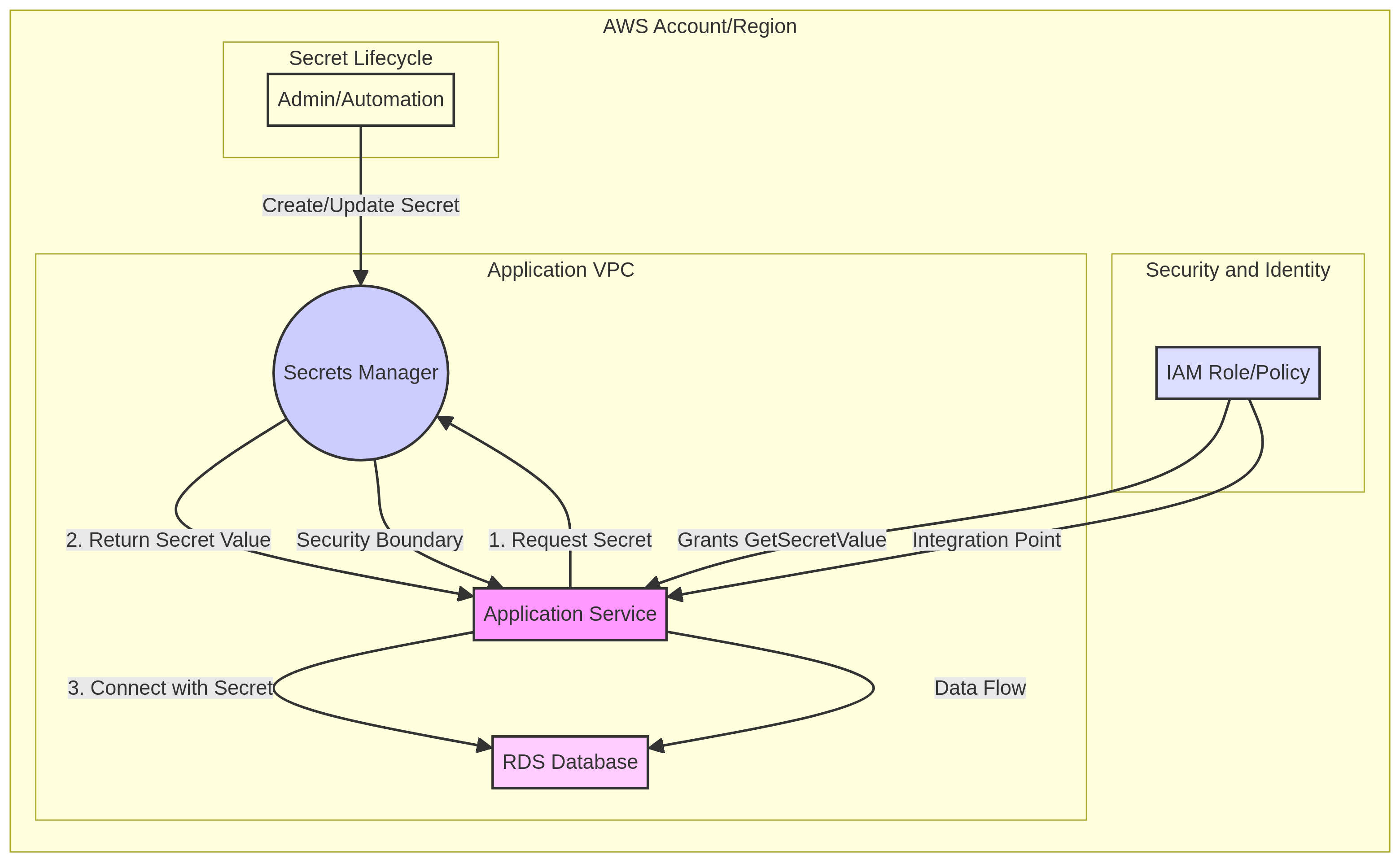
Deployment Guide

Step-by-step instructions to deploy this project

Download Guide

Architecture Diagram

Visual representation of the system architecture

Download Architecture

Source Code

Complete source code and configuration files

View on GitHub

Video Tutorial

Watch the complete walkthrough video

Watch Now