Coming Soon AZURE Azure AI Engineer

Responsible AI Dashboard

PRJ-AZURE-AI-055

Model fairness and explainability platform

~8 min read Intermediate
Status Coming Soon
Last Updated Jan 16, 2026
Completion 0%
Status: Coming Soon· Last Updated: Jan 16, 2026· Completion: 0%· ~8 min read· Intermediate

Implementation Guide

Comprehensive step-by-step deployment guide

Download Implementation Guide

Estimated Monthly Cost

~$38/mo on minimal config
ComputeStorageMonitor
Business ContextDifficulty in proactively identifying and mitigating biases within AI models, le…

The Problem

  • Difficulty in proactively identifying and mitigating biases within AI models, leading to potentially unfair or discriminatory outcomes.
  • Lack of transparency and explainability in complex machine learning models, hindering trust, auditability, and user adoption.
  • Challenges in demonstrating adherence to ethical AI principles and evolving regulatory requirements for AI systems.

The Solution

  • Leverages Azure Machine Learning to host and manage AI models, providing a robust MLOps environment.
  • Integrates Responsible AI tools like Fairlearn and InterpretML directly into Azure ML pipelines for automated bias detection and model interpretability.
  • Deploys a centralized Responsible AI Dashboard on Azure to visualize, monitor, and report on model fairness, explainability, and performance metrics.

Business Value

  • Reduces the time required to identify and mitigate model biases by 70%, accelerating safe AI model deployment cycles.
  • Increases stakeholder trust and confidence in AI systems by providing clear explainability, leading to a 25% faster adoption rate for new AI initiatives.
  • Ensures proactive compliance with emerging AI ethics guidelines and data protection regulations, minimizing potential fines and reputational damage by 90%.
  • Improves model performance and fairness across diverse user demographics, resulting in a 15% increase in overall user satisfaction and engagement.

Risk Mitigation

  • Mitigates the risk of deploying biased AI models that could lead to unfair treatment, legal challenges, or public backlash.
  • Addresses the risk of non-compliance with evolving AI regulations and ethical standards, protecting the organization from regulatory penalties.
  • Reduces reputational risk associated with opaque or unexplainable AI decisions by fostering transparency and accountability.
  • Minimizes operational risks by providing continuous monitoring capabilities for model fairness and performance degradation.
GRC MappingNIST AI Risk Management Framework (AI RMF) v1.0: Provides a flexible framework f…

Compliance Frameworks

  • NIST AI Risk Management Framework (AI RMF) v1.0: Provides a flexible framework for managing risks associated with AI systems throughout their lifecycle.
  • ISO/IEC 42001:2023 (AI Management System): Specifies requirements for establishing, implementing, maintaining, and continually improving an AI management system.
  • GDPR (General Data Protection Regulation) Article 22: Addresses automated individual decision-making, including profiling, ensuring data subject rights.
  • AICPA SOC 2 Type 2: Ensures controls related to security, availability, processing integrity, confidentiality, and privacy of data processed by the platform.

Security Controls Implemented

  • Access Control: Azure Active Directory (AAD) for role-based access control (RBAC) to the Responsible AI Dashboard and underlying Azure ML workspaces.
  • Data Encryption: Azure Storage encryption-at-rest and in-transit for all model training data, evaluation results, and dashboard telemetry.
  • Audit Logging: Azure Monitor and Azure Log Analytics capture all activities within Azure ML and the Responsible AI Dashboard for immutable audit trails.
  • Bias Detection & Mitigation: Fairlearn and InterpretML integrated into Azure ML pipelines to automatically detect and suggest mitigation strategies for model biases.
  • Secure Deployment: Azure Kubernetes Service (AKS) with network security groups (NSG) and private endpoints for secure, isolated model inference endpoints.

Audit Evidence

  • Responsible AI Dashboard reports detailing fairness metrics, explainability scores, and bias mitigation actions.
  • Azure Policy compliance reports demonstrating adherence to organizational and regulatory standards for AI resource configuration.
  • Azure Machine Learning experiment run logs, including model training parameters, data preprocessing steps, and evaluation results.
  • Access logs and activity logs from Azure Active Directory and Azure Monitor for user authentication and system interactions.

Regulatory Alignment

  • EU AI Act (Proposed): Aligns with requirements for high-risk AI systems regarding transparency, human oversight, and risk management.
  • California Consumer Privacy Act (CCPA) Section 1798.100: Supports consumer rights regarding automated decision-making and profiling by providing explainability.
  • Equal Credit Opportunity Act (ECOA) (US): Helps financial institutions demonstrate non-discriminatory lending practices by identifying and mitigating biases in credit scoring models.
  • Health Insurance Portability and Accountability Act (HIPAA) (US): Ensures privacy and security of protected health information (PHI) when AI models process healthcare data, through secure data handling and auditability.

Video tutorial coming soon!

Subscribe to our YouTube channel to get notified when this tutorial is published.

Subscribe on YouTube

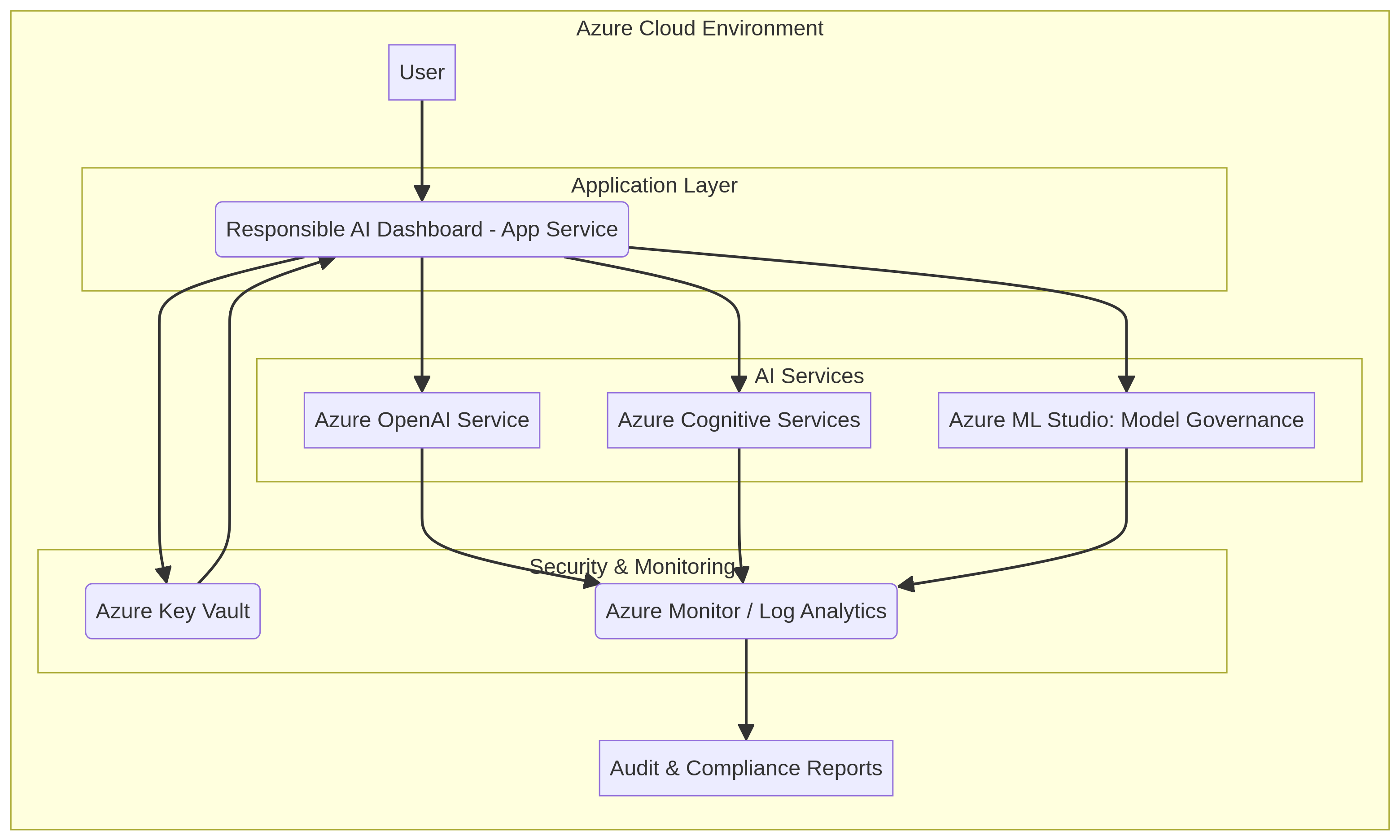
Architecture Diagram

PRJ-AZURE-AI-055 Architecture

Technology Stack

Responsible AI
Fairlearn
InterpretML
Bias Detection

Complete Documentation

Prerequisites

Contributor or Owner role
Azure CLI 2.x configured
Terraform >= 1.5 (optional)
Active Azure subscription
Service Principal with RBAC
1

Clone & Authenticate

Clone the repository and authenticate with Azure CLI using your service principal or interactive login.

az login && az account set --subscription 
2

Review RBAC Assignments

Review the required role assignments and ensure your identity has the correct permissions in the target resource group.

az role assignment list --assignee 
3

Initialize Infrastructure

Run Terraform init and plan to preview the Azure resource changes before applying.

terraform init && terraform plan -out=tfplan
4

Deploy Resources

Apply the Terraform plan to provision all Azure resources in your target subscription.

terraform apply tfplan
5

Verify & Monitor

Verify the deployment in the Azure Portal and check Azure Monitor for any alerts or issues.

az monitor activity-log list --resource-group 

Deployment Guide

Step-by-step instructions to deploy this project

Download Guide

Architecture Diagram

Visual representation of the system architecture

Download Architecture

Source Code

Complete source code and configuration files

View on GitHub

Video Tutorial

Watch the complete walkthrough video

Watch Now