Coming Soon AZURE Azure Security Engineer

Azure Sentinel SIEM/SOAR

PRJ-AZURE-SEC-058

Cloud-native security operations center

~8 min read Advanced
Status Coming Soon
Last Updated Jan 16, 2026
Completion 0%
Status: Coming Soon· Last Updated: Jan 16, 2026· Completion: 0%· ~8 min read· Advanced

Implementation Guide

Comprehensive step-by-step deployment guide

Download Implementation Guide

Estimated Monthly Cost

~$38/mo on minimal config
ComputeStorageMonitor
Business ContextTraditional on-premises SIEM solutions struggle with the scale, dynamism, and di…

The Problem

  • Traditional on-premises SIEM solutions struggle with the scale, dynamism, and distributed nature of cloud environments, leading to blind spots in Azure security posture.
  • Manual correlation of security alerts from disparate Azure services (e.g., Azure Activity Logs, Azure AD, network flow logs) is time-consuming and prone to human error, delaying incident response.
  • Lack of automated response capabilities for common security incidents in Azure, resulting in slow remediation and increased dwell time for threats.

The Solution

  • Implementation of Azure Sentinel as a cloud-native SIEM to ingest, analyze, and correlate security data across the entire Azure estate.
  • Leveraging Azure Log Analytics workspaces for scalable data collection and retention from various Azure resources, providing a centralized repository for security events.
  • Developing automated incident response workflows using Azure Logic Apps and Playbooks to orchestrate actions like isolating compromised resources or enriching incident data.

Business Value

  • Reduces mean time to detect (MTTD) security threats by 70% through real-time analytics and AI-driven threat detection in Azure Sentinel.
  • Decreases mean time to respond (MTTR) to incidents by 50% with automated playbooks, minimizing potential business disruption.
  • Achieves 99.9% visibility into Azure security events, significantly reducing the risk of undetected breaches.
  • Lowers operational costs for security monitoring by 30% compared to traditional SIEM deployments, leveraging Azure's serverless and scalable architecture.

Risk Mitigation

  • Mitigates the risk of undetected advanced persistent threats (APTs) by providing comprehensive threat intelligence integration and behavioral analytics.
  • Reduces the impact of insider threats through continuous monitoring of user activities and access patterns within Azure.
  • Addresses compliance risks by centralizing audit logs and security events, simplifying reporting for regulatory requirements.
  • Minimizes data exfiltration risks by detecting anomalous data access and transfer activities across Azure services.
GRC MappingISO 27001:2022- Annex A.12.4 (Logging and Monitoring)…

Compliance Frameworks

  • ISO 27001:2022 - Annex A.12.4 (Logging and Monitoring)
  • NIST Cybersecurity Framework (CSF) - Detect (DE.CM-4, DE.AE-1) and Respond (RS.RP-1, RS.CO-2)
  • SOC 2 Type 2 - Criteria for Security (CC6.1, CC7.1)
  • CIS Controls v8 - Control 8 (Audit Log Management)

Security Controls Implemented

  • Azure Sentinel for centralized security event collection and correlation (SIEM).
  • Azure Log Analytics for secure and immutable storage of audit logs and security data.
  • Azure Logic Apps to automate incident response workflows, such as blocking malicious IPs.
  • Azure Sentinel Playbooks for automated threat containment and remediation actions.
  • Custom detection rules within Azure Sentinel to identify specific threat patterns relevant to the organization's risk profile.

Audit Evidence

  • Azure Sentinel incident reports detailing detected threats, affected assets, and response actions.
  • Log Analytics query results demonstrating data ingestion, retention, and access controls.
  • Logic App run history and playbook execution logs for automated response actions.
  • Configuration documentation for Azure Sentinel analytics rules, connectors, and workbooks.

Regulatory Alignment

  • GDPR - Article 32 (Security of processing) and Article 33 (Notification of a personal data breach to the supervisory authority).
  • HIPAA - 45 CFR Part 164.308(a)(1)(ii)(D) (Information System Activity Review) and 164.312(b) (Audit Controls).
  • PCI DSS v4.0 - Requirement 10 (Log and Monitor All Access to System Components and Cardholder Data).
  • CCPA - Section 1798.150 (Right to bring action for data breaches).

Video tutorial coming soon!

Subscribe to our YouTube channel to get notified when this tutorial is published.

Subscribe on YouTube

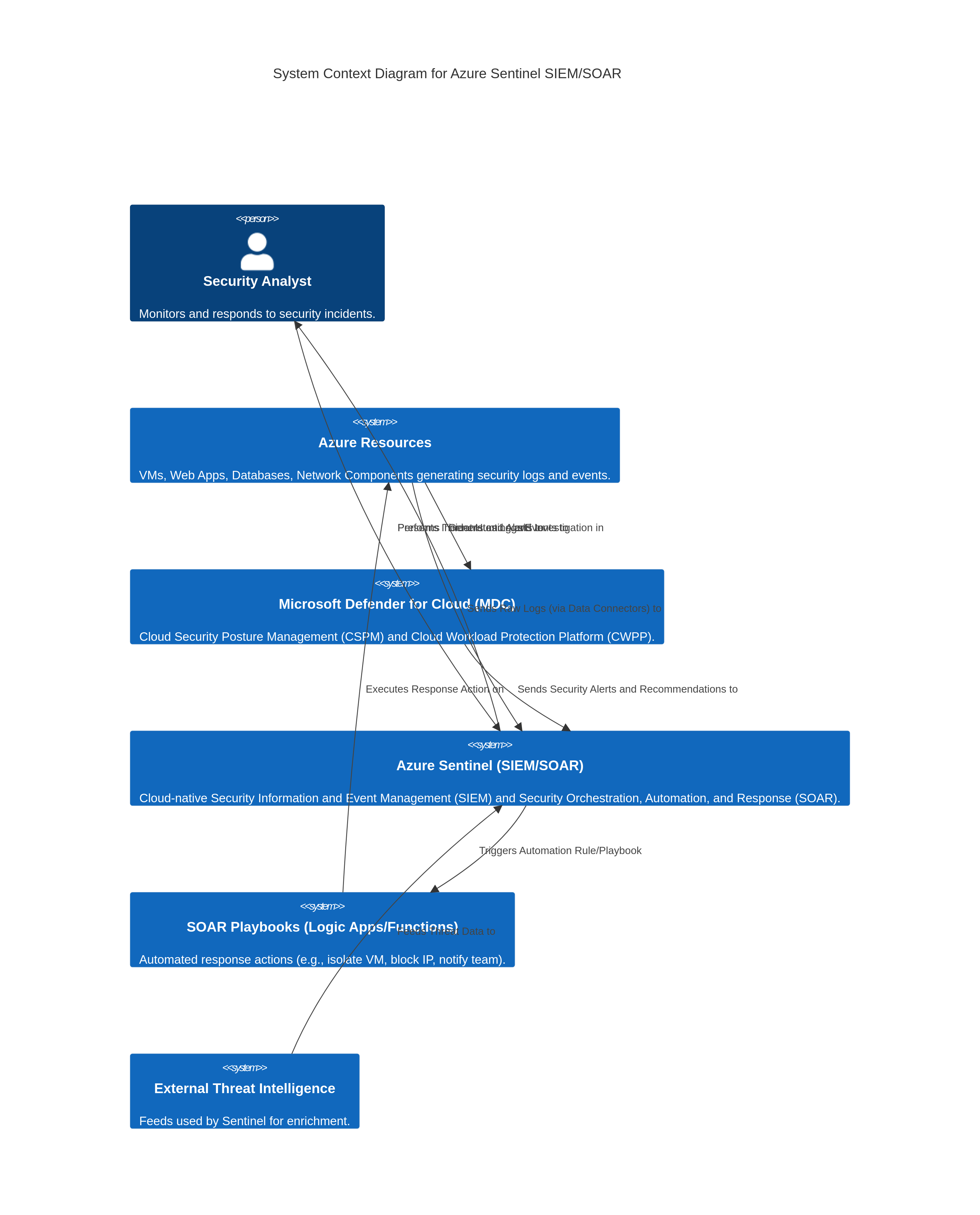
Architecture Diagram

PRJ-AZURE-SEC-058 Architecture

Technology Stack

Sentinel
Log Analytics
Logic Apps
Playbooks
SIEM

Complete Documentation

Prerequisites

Contributor or Owner role
Azure CLI 2.x configured
Terraform >= 1.5 (optional)
Active Azure subscription
Service Principal with RBAC
1

Clone & Authenticate

Clone the repository and authenticate with Azure CLI using your service principal or interactive login.

az login && az account set --subscription 
2

Review RBAC Assignments

Review the required role assignments and ensure your identity has the correct permissions in the target resource group.

az role assignment list --assignee 
3

Initialize Infrastructure

Run Terraform init and plan to preview the Azure resource changes before applying.

terraform init && terraform plan -out=tfplan
4

Deploy Resources

Apply the Terraform plan to provision all Azure resources in your target subscription.

terraform apply tfplan
5

Verify & Monitor

Verify the deployment in the Azure Portal and check Azure Monitor for any alerts or issues.

az monitor activity-log list --resource-group 

Deployment Guide

Step-by-step instructions to deploy this project

Download Guide

Architecture Diagram

Visual representation of the system architecture

Download Architecture

Source Code

Complete source code and configuration files

View on GitHub

Video Tutorial

Watch the complete walkthrough video

Watch Now