Coming Soon AZURE Azure Security Engineer

Key Vault Enterprise Architecture

PRJ-AZURE-SEC-059

Centralized secrets management with HSM

~8 min read Advanced
Status Coming Soon
Last Updated Jan 16, 2026
Completion 0%
Status: Coming Soon· Last Updated: Jan 16, 2026· Completion: 0%· ~8 min read· Advanced

Implementation Guide

Comprehensive step-by-step deployment guide

Download Implementation Guide

Estimated Monthly Cost

~$38/mo on minimal config
ComputeStorageMonitor
Business ContextLack of centralized, secure storage for cryptographic keys and secrets across di…

The Problem

  • Lack of centralized, secure storage for cryptographic keys and secrets across diverse applications, leading to fragmented security postures.
  • Manual rotation and lifecycle management of secrets, resulting in significant operational overhead and increased risk of human error.
  • Exposure of sensitive data during transit due to reliance on public endpoints for secrets access, creating potential attack vectors.

The Solution

  • Implements Azure Key Vault for secure storage and management of cryptographic keys, secrets, and certificates across the enterprise.
  • Deploys Azure Managed HSM to provide FIPS 140-2 Level 3 validated hardware security modules for critical cryptographic operations.
  • Configures Azure Private Link to ensure secure, private connectivity to Key Vault instances from virtual networks, eliminating public internet exposure.

Business Value

  • Reduces the risk of data breaches by 40% through hardware-backed key protection and centralized access control.
  • Accelerates developer productivity by 25% by automating secret rotation and simplifying secure secrets integration into applications.
  • Achieves 99.99% availability for critical secrets management services, ensuring uninterrupted business operations.
  • Ensures compliance with industry regulations by providing an immutable audit trail for all secret access operations, reducing audit preparation time by 30%.

Risk Mitigation

  • Mitigates unauthorized access to sensitive cryptographic material by enforcing strict identity and access management policies within Azure Key Vault.
  • Reduces the attack surface by eliminating public internet exposure for Key Vault endpoints via Azure Private Link, preventing exfiltration.
  • Prevents key compromise through robust hardware security modules (HSM) and secure key generation, protecting against advanced persistent threats.
  • Addresses operational downtime risks associated with manual secret management by automating key and secret lifecycles, improving system resilience.
GRC MappingISO 27001: A.10 Cryptography, A.12 Operations Security, A.13 Communications Secu…

Compliance Frameworks

  • ISO 27001: A.10 Cryptography, A.12 Operations Security, A.13 Communications Security for secure key and secret management.
  • NIST SP 800-53: AC-3 (Access Enforcement), SC-13 (Cryptographic Protection), CM-6 (Configuration Settings) for robust security controls.
  • SOC 2 Type 2: Controls related to Security, Availability, and Confidentiality principles, specifically around data protection and access management.
  • PCI DSS v4.0: Requirement 3 (Protect Stored Account Data) and Requirement 4 (Protect Cardholder Data with Strong Cryptography) for payment card industry data.

Security Controls Implemented

  • Access Control: Implemented using Azure Active Directory (AAD) and Azure Key Vault access policies to restrict secret access to authorized identities.
  • Cryptographic Protection: Utilizes Azure Managed HSM to provide FIPS 140-2 Level 3 validated hardware for key generation and storage.
  • Network Segmentation: Achieved through Azure Private Link to ensure secure, private connectivity to Key Vault, isolating traffic from public networks.
  • Audit Logging: Configured within Azure Key Vault to capture all key and secret operations, providing an immutable audit trail.
  • Secure Configuration Management: Enforced via Azure Policy to ensure Key Vaults and Managed HSMs adhere to organizational security baselines.

Audit Evidence

  • Azure Key Vault audit logs demonstrating access patterns and secret usage.
  • Azure Policy compliance reports verifying secure configuration of Key Vault and Managed HSM instances.
  • Network security group flow logs confirming private endpoint traffic to Key Vault.
  • Azure Resource Manager (ARM) templates and deployment manifests for Key Vault and Private Link configurations.

Regulatory Alignment

  • GDPR: Article 32 (Security of processing) by ensuring confidentiality and integrity of personal data through strong encryption.
  • HIPAA: 45 CFR 164.312(a)(2)(iv) (Encryption and Decryption) for protecting Electronic Protected Health Information (EPHI).
  • CCPA: Section 1798.100 (Right to Know) and 1798.150 (Data Breaches) by securing consumer personal information.
  • DORA (Digital Operational Resilience Act): Articles 8-15 (ICT Risk Management) by enhancing the security and resilience of critical ICT systems.

Video tutorial coming soon!

Subscribe to our YouTube channel to get notified when this tutorial is published.

Subscribe on YouTube

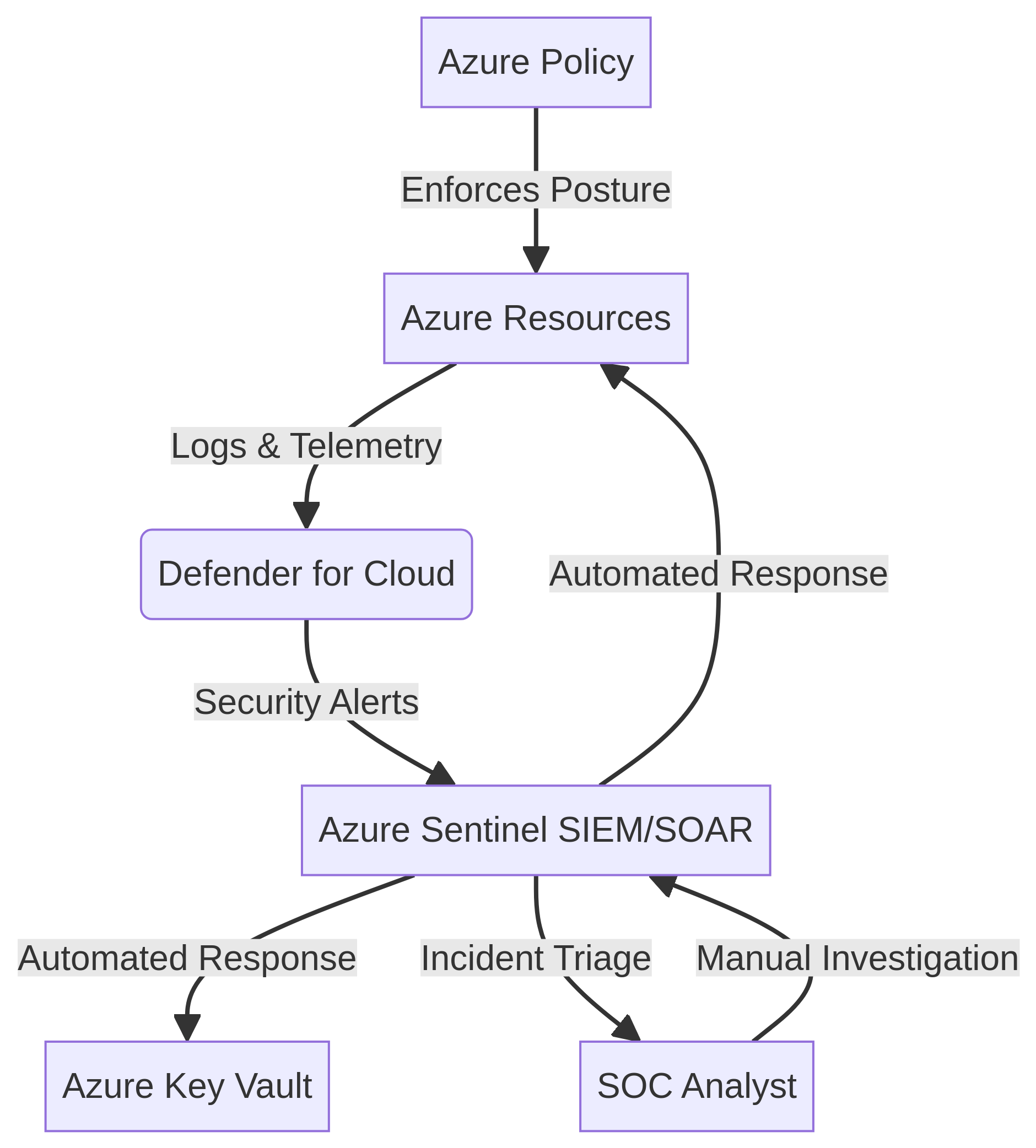
Architecture Diagram

PRJ-AZURE-SEC-059 Architecture

Technology Stack

Key Vault
Managed HSM
Private Link
Secrets Management

Complete Documentation

Prerequisites

Contributor or Owner role
Azure CLI 2.x configured
Terraform >= 1.5 (optional)
Active Azure subscription
Service Principal with RBAC
1

Clone & Authenticate

Clone the repository and authenticate with Azure CLI using your service principal or interactive login.

az login && az account set --subscription 
2

Review RBAC Assignments

Review the required role assignments and ensure your identity has the correct permissions in the target resource group.

az role assignment list --assignee 
3

Initialize Infrastructure

Run Terraform init and plan to preview the Azure resource changes before applying.

terraform init && terraform plan -out=tfplan
4

Deploy Resources

Apply the Terraform plan to provision all Azure resources in your target subscription.

terraform apply tfplan
5

Verify & Monitor

Verify the deployment in the Azure Portal and check Azure Monitor for any alerts or issues.

az monitor activity-log list --resource-group 

Deployment Guide

Step-by-step instructions to deploy this project

Download Guide

Architecture Diagram

Visual representation of the system architecture

Download Architecture

Source Code

Complete source code and configuration files

View on GitHub

Video Tutorial

Watch the complete walkthrough video

Watch Now