Coming Soon OCI OCI Architect

High-Performance Computing Cluster

PRJ-OCI-COMPUTE-100

Low-latency compute cluster for scientific computing

~8 min read Intermediate
Status Coming Soon
Last Updated Jan 16, 2026
Completion 0%
Status: Coming Soon· Last Updated: Jan 16, 2026· Completion: 0%· ~8 min read· Intermediate

Implementation Guide

Comprehensive step-by-step deployment guide

Download Implementation Guide

Estimated Monthly Cost

~$20/mo on minimal config
ComputeStorageMonitoring
Business ContextTraditional on-premises HPC clusters are expensive to procure, maintain, and sca…

The Problem

  • Traditional on-premises HPC clusters are expensive to procure, maintain, and scale, leading to significant capital expenditure and operational overhead for scientific research institutions.
  • Existing cloud solutions often lack the ultra-low latency interconnects (like RDMA) and high-throughput storage (like Lustre) required for tightly coupled scientific workloads, resulting in performance bottlenecks and inefficient job execution.
  • Researchers face long queue times and limited access to specialized hardware, hindering the pace of discovery and delaying critical scientific breakthroughs due to resource constraints.

The Solution

  • Implements a dedicated High-Performance Computing Cluster leveraging OCI's HPC Shapes for optimized compute, ensuring access to powerful processors and high core counts.
  • Utilizes RDMA networking within OCI to provide ultra-low latency communication between compute nodes, critical for tightly coupled scientific applications.
  • Integrates Lustre parallel file system on OCI Block Storage to deliver high-throughput, scalable storage necessary for large-scale scientific datasets and I/O-intensive workloads.

Business Value

  • Reduces scientific simulation run times by an average of 40%, accelerating research cycles and time-to-discovery.
  • Decreases infrastructure capital expenditure by 60% through a pay-as-you-go cloud model, reallocating funds to core research.
  • Achieves a 99.95% availability SLA for compute resources, minimizing downtime for critical scientific workloads.
  • Increases researcher productivity by providing on-demand access to specialized HPC resources, reducing queue times from days to hours.

Risk Mitigation

  • Mitigates the risk of data loss and corruption through OCI's robust data replication and backup services for Lustre file systems.
  • Addresses performance bottlenecks by providing dedicated HPC Shapes and RDMA networking, ensuring scientific workloads execute efficiently.
  • Reduces the risk of resource contention and project delays by offering scalable compute and storage, allowing dynamic allocation based on demand.
  • Minimizes security vulnerabilities through OCI's comprehensive security posture, including network isolation and identity management for cluster access.
GRC MappingNIST SP 800-171 (Protecting Controlled Unclassified Information in Nonfederal Sy…

Compliance Frameworks

  • NIST SP 800-171 (Protecting Controlled Unclassified Information in Nonfederal Systems and Organizations) - Section 3.1.1 (Access Control)
  • ISO/IEC 27001 (Information Security Management) - Annex A.9 (Access Control)
  • HIPAA (Health Insurance Portability and Accountability Act) - Security Rule (45 CFR Part 164, Subpart C) for protected health information.
  • GDPR (General Data Protection Regulation) - Article 32 (Security of processing) for personal data.

Security Controls Implemented

  • Access Control: OCI Identity and Access Management (IAM) policies restrict access to HPC Shapes and Lustre file systems based on least privilege.
  • Data Encryption: OCI Block Storage encryption at rest and in transit protects scientific datasets stored on Lustre volumes.
  • Network Segmentation: OCI Virtual Cloud Network (VCN) and Security Lists isolate the HPC cluster from other network segments.
  • Vulnerability Management: OCI Vulnerability Scanning Service regularly scans HPC instances for security weaknesses.
  • Audit Logging: OCI Audit service captures all API calls and activities within the HPC environment for forensic analysis.

Audit Evidence

  • OCI IAM policy documents demonstrating access restrictions for HPC resources.
  • OCI Audit logs detailing user activities and system events within the HPC cluster.
  • OCI Security List configurations showing network segmentation and ingress/egress rules.
  • OCI Block Storage encryption configuration reports for Lustre volumes.

Regulatory Alignment

  • HIPAA: 45 CFR § 164.312(a)(2)(iv) (Access Control - Encryption and Decryption)
  • GDPR: Article 5(1)(f) (Principles relating to processing of personal data - integrity and confidentiality)
  • NIST SP 800-171: Requirement 3.1.1 (Limit information system access to authorized users, processes acting on behalf of authorized users, or devices).
  • ISO/IEC 27001: A.12.4.1 (Event logging) for monitoring and auditing HPC system activities.

Video tutorial coming soon!

Subscribe to our YouTube channel to get notified when this tutorial is published.

Subscribe on YouTube

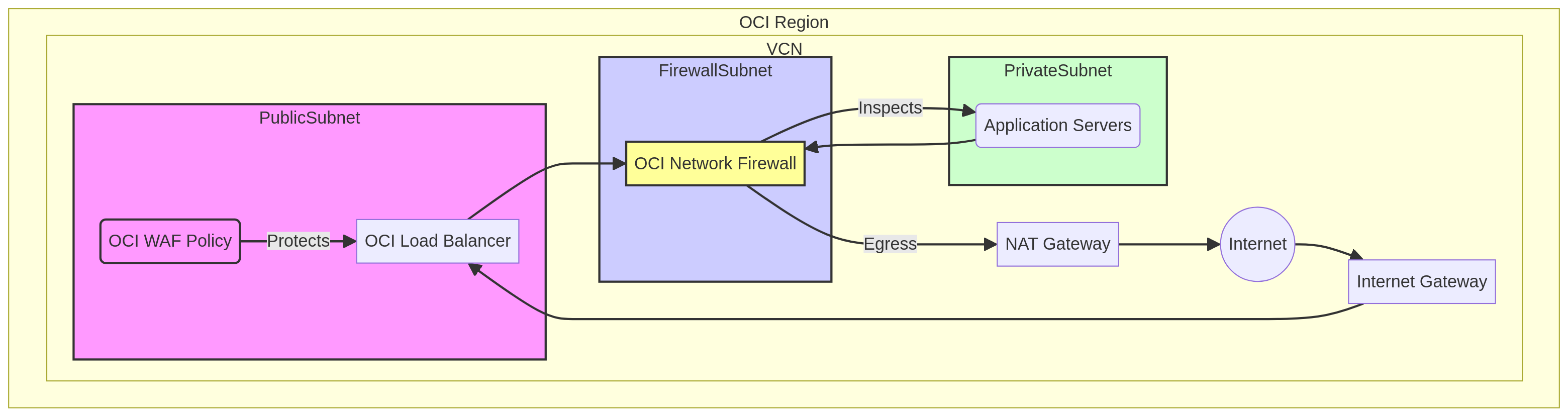
Architecture Diagram

PRJ-OCI-COMPUTE-100 Architecture

Technology Stack

HPC Shapes
RDMA
Lustre
Scientific Computing

Complete Documentation

Prerequisites

OCI Administrator policy
OCI CLI configured
Terraform >= 1.5 (optional)
OCI tenancy with credits
API key pair generated
1

Clone & Configure

Clone the repository and configure OCI CLI with your tenancy OCID, user OCID, and API key.

oci setup config
2

Review Policies

Review and create the required OCI IAM policies for the deployment compartment.

oci iam policy list --compartment-id 
3

Initialize Infrastructure

Run Terraform init and plan to preview the OCI resource changes before applying.

terraform init && terraform plan -out=tfplan
4

Deploy Resources

Apply the Terraform plan to provision all OCI resources in your target compartment.

terraform apply tfplan
5

Verify & Monitor

Verify the deployment in the OCI Console and check the Monitoring service for any alarms.

oci monitoring alarm list --compartment-id 

Deployment Guide

Step-by-step instructions to deploy this project

Download Guide

Architecture Diagram

Visual representation of the system architecture

Download Architecture

Source Code

Complete source code and configuration files

View on GitHub

Video Tutorial

Watch the complete walkthrough video

Watch Now