Coming Soon AZURE Azure Security Engineer

Zero Trust Architecture with Azure AD

PRJ-AZURE-SEC-057

Identity-centric security model implementation

~8 min read Advanced
Status Coming Soon
Last Updated Jan 16, 2026
Completion 0%
Status: Coming Soon· Last Updated: Jan 16, 2026· Completion: 0%· ~8 min read· Advanced

Implementation Guide

Comprehensive step-by-step deployment guide

Download Implementation Guide

Estimated Monthly Cost

~$38/mo on minimal config
ComputeStorageMonitor
Business ContextTraditional perimeter-based security models are insufficient against modern, sop…

The Problem

  • Traditional perimeter-based security models are insufficient against modern, sophisticated cyber threats, leading to increased breach risk.
  • Lack of granular access control and continuous verification for users and devices accessing corporate resources, especially in hybrid work environments.
  • Complex and disparate identity management systems hinder consistent security policy enforcement and increase operational overhead.

The Solution

  • Implementation of a comprehensive Zero Trust Architecture leveraging Azure AD for centralized identity management and authentication.
  • Deployment of Azure Conditional Access policies to enforce real-time, context-aware access decisions based on user, device, location, and application.
  • Integration of Microsoft Intune for unified endpoint management and compliance, ensuring device health and configuration before granting access.

Business Value

  • Reduces the likelihood of unauthorized access by 70% through continuous verification and least privilege principles.
  • Decreases security incident response time by 40% with enhanced visibility and automated threat detection via Azure Sentinel.
  • Achieves 99.9% compliance with internal security policies and external regulatory requirements.
  • Lowers operational costs associated with managing disparate security tools by 25% through a unified Azure security ecosystem.

Risk Mitigation

  • Mitigates insider threats by enforcing strict identity verification and access controls for all users, regardless of network location.
  • Reduces the attack surface by ensuring only compliant and healthy devices can access sensitive corporate data.
  • Protects against credential theft and phishing attacks through multi-factor authentication (MFA) and adaptive access policies.
  • Enhances data protection by encrypting data in transit and at rest, and controlling access based on data sensitivity.
GRC MappingNIST Cybersecurity Framework (CSF): Identify, Protect, Detect, Respond, Recover …

Compliance Frameworks

  • NIST Cybersecurity Framework (CSF): Identify, Protect, Detect, Respond, Recover functions for robust security posture.
  • ISO 27001:2022: Information Security Management System (ISMS) for systematic risk management and control implementation.
  • SOC 2 Type 2: Trust Services Criteria (Security, Availability, Confidentiality) for service organizations.
  • CIS Critical Security Controls (CSC): Implementation of foundational security hygiene practices.

Security Controls Implemented

  • Identity and Access Management (IAM): Enforced via Azure AD with strong authentication and authorization policies.
  • Endpoint Security: Managed through Microsoft Intune for device compliance and configuration.
  • Security Information and Event Management (SIEM): Centralized logging and threat detection using Azure Sentinel.
  • Network Segmentation: Achieved through Azure network security groups and virtual networks, supporting Zero Trust principles.
  • Data Loss Prevention (DLP): Implemented through Conditional Access policies to restrict data access based on context.

Audit Evidence

  • Azure AD sign-in and audit logs demonstrating access attempts and policy enforcement.
  • Conditional Access policy reports detailing access decisions and blocked attempts.
  • Intune device compliance reports and configuration profiles.
  • Azure Sentinel incident reports and security alerts.

Regulatory Alignment

  • GDPR (Article 32): Security of processing, ensuring appropriate technical and organizational measures.
  • HIPAA (45 CFR Part 164.312): Technical safeguards for electronic protected health information.
  • CCPA (Civil Code 1798.150): Reasonable security procedures and practices appropriate to the nature of the information.
  • PCI DSS (Requirement 8): Identify and authenticate access to system components.

Video tutorial coming soon!

Subscribe to our YouTube channel to get notified when this tutorial is published.

Subscribe on YouTube

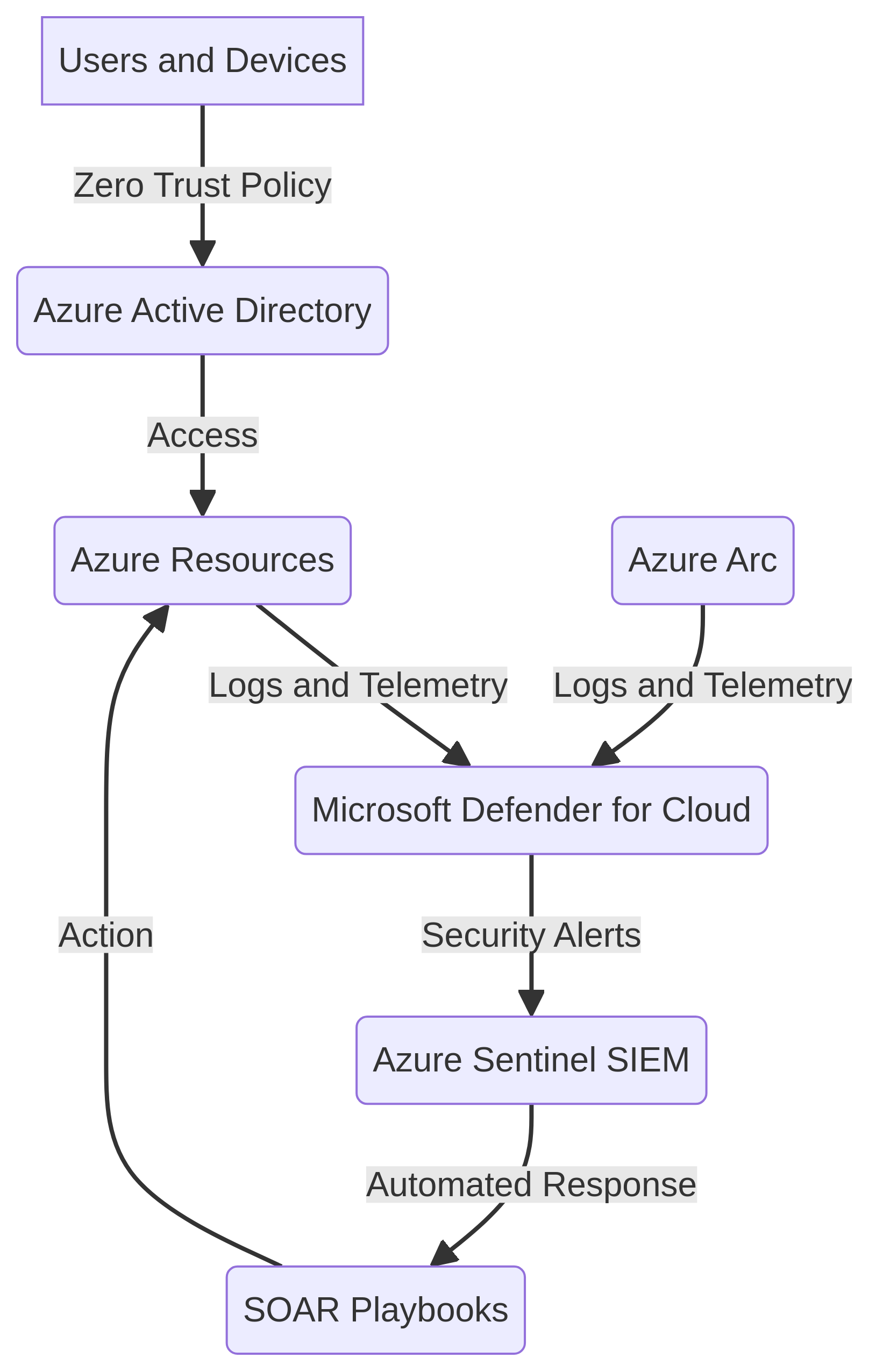
Architecture Diagram

PRJ-AZURE-SEC-057 Architecture

Technology Stack

Azure AD
Conditional Access
Intune
Sentinel
Zero Trust

Complete Documentation

Prerequisites

Contributor or Owner role
Azure CLI 2.x configured
Terraform >= 1.5 (optional)
Active Azure subscription
Service Principal with RBAC
1

Clone & Authenticate

Clone the repository and authenticate with Azure CLI using your service principal or interactive login.

az login && az account set --subscription 
2

Review RBAC Assignments

Review the required role assignments and ensure your identity has the correct permissions in the target resource group.

az role assignment list --assignee 
3

Initialize Infrastructure

Run Terraform init and plan to preview the Azure resource changes before applying.

terraform init && terraform plan -out=tfplan
4

Deploy Resources

Apply the Terraform plan to provision all Azure resources in your target subscription.

terraform apply tfplan
5

Verify & Monitor

Verify the deployment in the Azure Portal and check Azure Monitor for any alerts or issues.

az monitor activity-log list --resource-group 

Deployment Guide

Step-by-step instructions to deploy this project

Download Guide

Architecture Diagram

Visual representation of the system architecture

Download Architecture

Source Code

Complete source code and configuration files

View on GitHub

Video Tutorial

Watch the complete walkthrough video

Watch Now