Business Context
Understanding the real-world value and application
The Problem
- Existing database infrastructure struggles with high-volume transactional workloads, leading to performance bottlenecks and slow response times for critical business applications.
- Managing and scaling traditional on-premises database systems like Oracle RAC and ASM is complex, resource-intensive, and prone to human error, increasing operational overhead.
- Lack of integrated hardware and software optimization results in suboptimal resource utilization and higher total cost of ownership for enterprise-grade database solutions.
The Solution
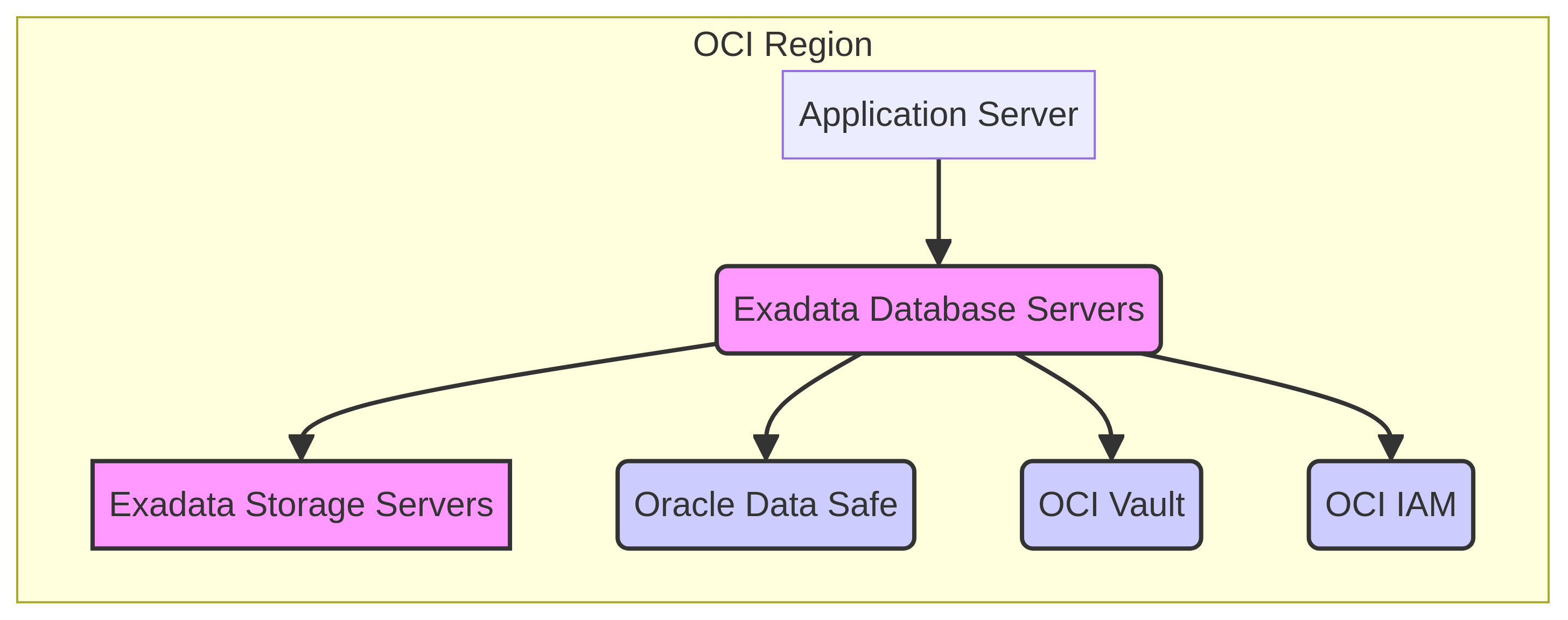
- Implement Exadata Cloud Service on OCI to provide a fully optimized, high-performance database platform.
- Leverage RAC and ASM for enhanced database availability and scalable storage management.
- Utilize the pre-configured and integrated hardware/software stack of Exadata to streamline deployment and management of enterprise databases.
Business Value
- Achieves up to 10x performance improvement for OLTP and OLAP workloads, reducing query times from minutes to seconds.
- Reduces database administration effort by 50% through automation and integrated management tools, freeing up IT resources.
- Increases database availability to 99.99% with built-in fault tolerance and disaster recovery capabilities, minimizing downtime impact.
- Optimizes infrastructure costs by consolidating multiple databases onto a single Exadata platform, reducing licensing and hardware expenses by 30%.
Risk Mitigation
- Mitigates performance risks by providing dedicated, high-throughput I/O and compute resources for critical database operations.
- Addresses operational complexity and human error through automated patching, backups, and scaling features inherent in Exadata Cloud Service.
- Reduces vendor lock-in risks by supporting standard Oracle database versions, allowing for future migration flexibility if needed.
- Ensures data integrity and security with advanced encryption, access controls, and auditing capabilities built into the Exadata platform.